
Don’t Ban AI From Children. Teach Them to Master It.
Children need to understand AI without surrendering their own judgment. A father and technology founder makes the case for guided exposure and independent thinking.

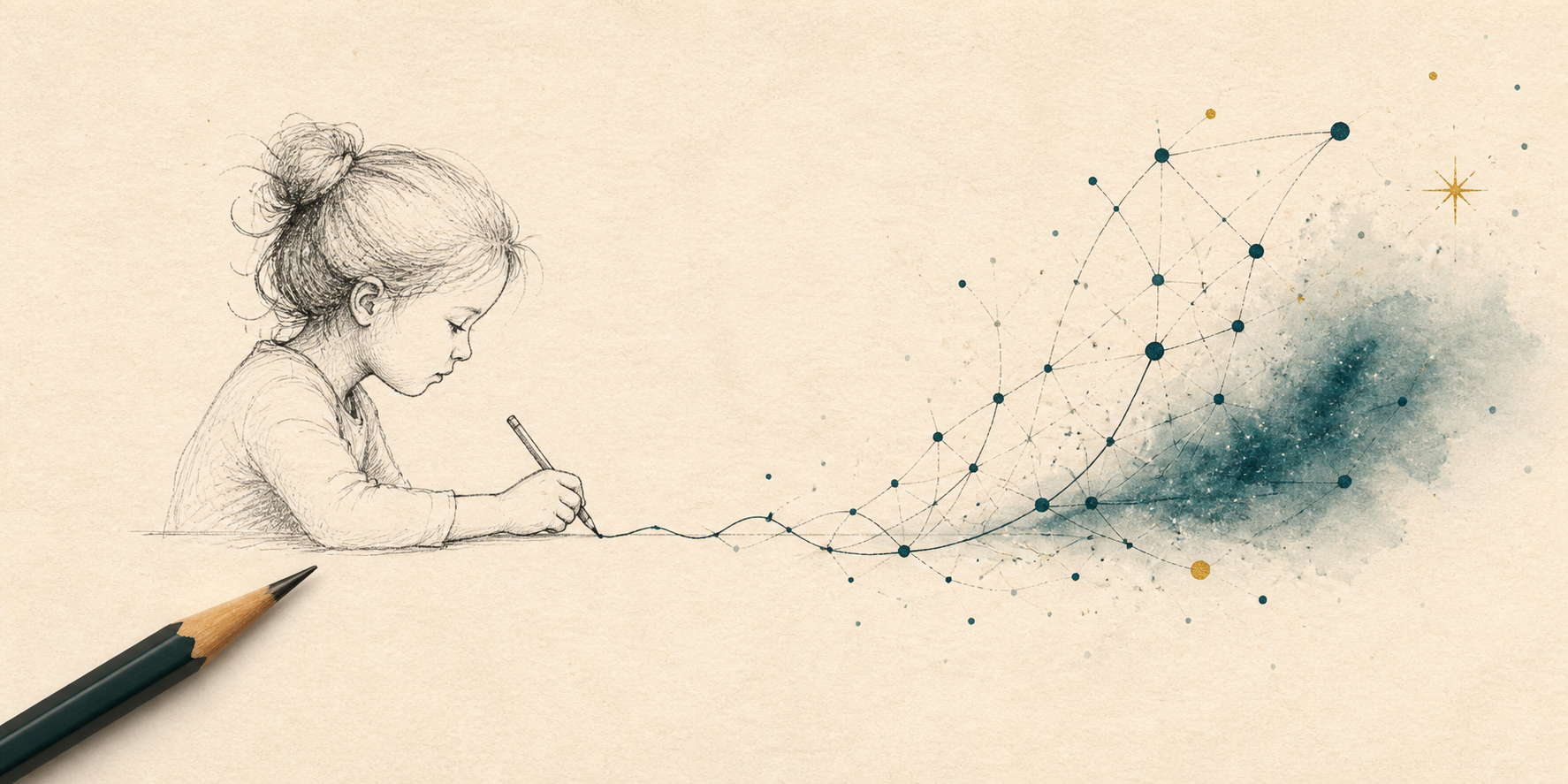
When my older boys first started using computers, at around four or five, I had a fairly simple expectation: enjoy yourself, but learn to do something difficult with the machine.
They played games. They wasted time. They were children. But I kept encouraging them to build things, solve problems and understand what was happening beneath the screen. Access was only the beginning. What mattered was what they learned to do with it.
I thought about that when New York City announced its new school AI policy on September 2. For the 2026–27 school year, the city is pausing student-facing generative AI from 2-K through eighth grade. High schools will have limited approved uses, pilots and required AI literacy lessons. This is a one-year moratorium, not a permanent rejection of the technology. That distinction deserves to survive the headlines. [1]
I understand the decision. A school cannot experiment as casually as a technically confident parent can at home. It has to protect every child, support teachers and answer for what happens when a product fails.
Still, I want that year to produce a route toward greater capability. A pause can buy time. It cannot, by itself, teach judgment.
My ambition is that children leave eighth grade with a working understanding of AI, an ability to question its output and enough intellectual independence to know when to leave it alone. Getting there will require much more careful thinking than either handing out chatbot accounts or blocking them.
What my children taught me about technology
Kevin has become deeply comfortable with networking, computers and cybersecurity. Michael gravitates toward technical design, engineering concepts and modelling. Richard, now in eighth grade, is still finding the direction that interests him most, but he is already confident around computers.
I am proud of that. I also know my family's experience is not a controlled study. My children had a father who builds technology products, takes an interest in their experiments and can help when something goes wrong. Other children have different resources, interests and needs.
The lesson I take from watching them is therefore narrower than “early access works.” Familiarity became useful because it came with expectations. They were encouraged to move beyond consuming what somebody else had made.
AI makes that responsibility more demanding. A computer can distract a child for hours. A generative AI assistant can also produce an impressive imitation of the very work the child is supposed to learn to do. It can make a gap in understanding harder for everyone to see, including the child.
That is where the comparison with my sons' early computer use reaches its limit. I still believe in guided exposure. I would be much more deliberate about what the tool is allowed to take over.
Better work is not always better learning
The research that most challenged my optimism came from a study of nearly a thousand high-school mathematics students in Turkey, published in PNAS in 2025. Researchers compared ordinary resources with two GPT-4-based tools: a general chat interface and a tutor designed with safeguards to support learning. [2]
Students using the general interface did better during assisted practice. But when the AI was removed, their exam performance was 17 percent worse than the control group's. The safeguarded tutor largely removed that penalty, although it did not produce a positive exam effect relative to the control group. This was a particular mathematics setting, not a verdict on every AI tool or age group. It nevertheless exposes a serious mistake: measuring the quality of assisted work and calling it learning.
There is encouraging evidence too. A 2025 randomized study in an undergraduate Harvard physics course found stronger immediate learning gains with a carefully designed AI tutor than with the comparison classroom lessons. The analysis included 194 students. Those were university students studying specific material over a short period, using a tutor built around teaching principles. The finding does not establish that an ordinary chatbot is suitable for a seven-year-old. [3]
Taken together, these studies make me less interested in whether a product has AI and more interested in what it asks the learner to do.
For a learning activity, I would start with a simple test: after the tool is put away, can the student explain more, solve a related problem or notice an error they would previously have missed?
If the answer is no, a beautiful assignment may be hiding a disappointing lesson.
Give the thinking a place to happen
Consider an eighth-grade history essay. If the assignment ends with a polished document, AI can do much of what gets rewarded. The teacher needs to see some of the thinking that produced it.
I would ask the student to begin with a short argument of their own. Where approved AI use is appropriate, the next step could be asking the tool for the strongest objection. The student would then investigate that objection using actual historical sources, revise the argument and explain which advice they rejected. A brief conversation with the teacher could reveal more understanding than another page of fluent prose.
In mathematics, a hint can be useful after a real attempt. The student should then solve a similar problem without the assistant. In coding, a working program is a beginning: ask the student to explain one part, predict what a change will do and fix something that breaks.
These are proposed teaching routines, not claims that a clever prompt guarantees learning. A general chatbot may still give away the solution or offer a misleading explanation. Tool design and teacher judgment matter.
So does the purpose of the exercise. A child practising sentence construction needs to construct sentences. A student who already understands a technique may benefit from assistance that lets them attempt a more ambitious project. The same shortcut can be helpful in one lesson and defeat the purpose of another.
I would keep substantial time for reading, writing, discussion and problem-solving without AI. Those activities give children knowledge they can draw on when a machine sounds convincing. You cannot reliably check an explanation when you know nothing about the subject.
AI literacy can begin before chatbot access
One assumption in this debate needs more attention: learning about AI does not have to mean talking to it.
A younger child can compare an accurate statement with a plausible mistake selected by a teacher. A class can discuss why a computer-generated picture is not proof that something happened. Children can learn that private information should not be handed to an unfamiliar service. None of that requires a personal account or an unsupervised conversation.
UNESCO's guidance calls for age limits on independent conversations with generative AI, privacy protection and scrutiny of educational suitability. Its student competency framework goes beyond operating tools to include ethics, human agency and critical judgment. Those are useful foundations for a curriculum. [4][5]
As students mature, carefully supervised use could follow in approved settings, within the tool's age requirements and the school's rules. I would want responsibilities to increase with demonstrated understanding: checking a source, recognizing uncertainty, explaining an output and knowing when to ask an adult.
There is no need to claim that a child who starts prompting at six has an advantage that can never be recovered. We do not have evidence for that claim. Interfaces will change. The habit of questioning a confident answer is more durable than expertise in a particular chat box.
That distinction also makes a moratorium more productive. Schools can restrict direct use while still teaching children how to recognize and evaluate the AI-generated material they may encounter elsewhere.
The inequality question goes beyond access
My children had more than computers. They had someone around who could help them make sense of computers. That is a form of advantage, and it is easy for those of us in technology to underestimate it.
I worry that school restrictions could leave some children dependent on whatever guidance happens to be available at home. Families with money and technical confidence can arrange supervised experiments, projects and tutoring. Other families may have little time or support for any of that.
But subscriptions alone would not solve the problem. Giving less-supported children an automated answer service while better-supported children receive patient human instruction would create another kind of inequality.
The public obligation should be access to good teaching about AI. Sometimes that will include a carefully chosen tool. Sometimes it will mean a teacher helping a class understand why an output is unreliable. Both deserve funding.
This is why calls for “AI in every classroom” feel incomplete to me. Who will train the teachers? Who will evaluate the products? What happens when the system gives harmful advice or the vendor changes its terms? A purchasing decision is not an education strategy.
Make the pause answer a harder question
I would judge New York's moratorium by what the city learns during it. The city's high-school pilots and literacy requirements create an opportunity to gather evidence. They should also make clear what remains unknown about younger children. [1]
School leaders should publish what successful use looks like before they expand it. That should include independent performance after assistance is removed, whether knowledge lasts, how much teacher time the tool requires and whether benefits reach students with different levels of support. Faster homework completion is an inadequate measure.
Technology companies have responsibilities here too. An educational product should be designed around a learning objective, offer teachers meaningful control and minimize the information it collects. Schools need a practical way to report failures and stop using a product that is not helping. Claims about engagement should not substitute for evidence that children learn.
Parents also need guidance they can actually use. “Supervise your child” leaves a lot unexplained. Show us what good help looks like, what to do when an answer is wrong and how to recognize when assistance has become avoidance.
I would rather see a modest number of well-supported lessons than an ambitious rollout that leaves teachers to invent all of this alone.
The kind of mastery I want
When I say children should master AI, I do not mean they should spend childhood becoming faster at obtaining answers. I mean they should develop enough understanding to remain responsible for their decisions when answers are cheap and persuasive.
There should still be books that take time, problems that are frustrating and afternoons spent making something that does not work. Children need relationships with adults who know them, and experiences that cannot be reduced to a conversation with software. Any plan for AI in education has to make room for that life.
I remain glad that my sons encountered computers early. If I were starting again today, I would keep encouraging curiosity and building. I would also pay closer attention to what they could do after the screen was closed.
That is the standard I want schools to pursue: by the end of eighth grade, every child should have a foundation in AI literacy while continuing to develop the ability to read, write, calculate and reason independently. Direct access can vary with age, readiness and evidence. The educational ambition should remain.
My job as a parent was never finished when I put a computer in front of my children. The work was in what happened afterward. With AI, I think that work matters even more.
Sources
[1] New York City Public Schools. Guidance on Artificial Intelligence and Screen Time, 2026–27. https://www.schools.nyc.gov/about-us/policies/guidance-on-artificial-intelligence
[2] Bastani and colleagues. Generative AI without guardrails can harm learning: Evidence from high school mathematics. PNAS, 2025. https://doi.org/10.1073/pnas.2422633122
[3] Kestin and colleagues. AI tutoring outperforms in-class active learning: an RCT introducing a novel research-based design in an authentic educational setting. Scientific Reports, 2025. https://www.nature.com/articles/s41598-025-97652-6
[4] UNESCO. Guidance for generative AI in education and research, 2023. https://www.unesco.org/en/articles/guidance-generative-ai-education-and-research
[5] UNESCO. AI competency framework for students, 2024. https://www.unesco.org/en/articles/ai-competency-framework-students